
Webster Street Turns 150: New Reasons to Use What Was Already There
West Alameda didn't get a new park this year. It got a new name for the same patch of grass at 1435 Webster Street, and somehow that has mattered more than a new park would have.
I've walked that stretch of Webster more times than I can count over the past four decades, past the Pacific Pinball Museum, past Cookiebar, past whichever storefront was mid-turnover that particular year. What's happening on Webster in 2026 isn't a construction story. Nobody poured new concrete. Nobody widened a lane. The corridor is marking its 150th year the way a neighborhood actually marks something: by deciding to use what it already has.
The space at 1435 Webster used to be called the Healing Garden. It went in during a hard stretch five years back, and it did what it was built to do. Then last September, with Webster Street heading into its 150th anniversary year, the West Alameda Business Association renamed it Webster Park, put up the district's first new street banners since before COVID, and built a webpage for booking the space.
Marie Ortega, who owns Feathered Outlaw at 1506 Webster and chairs WABA's board, put it simply when the rename was announced: Webster Park represents the heart of what West Alameda is all about. The land didn't change. The stage, the benches, and the invitation to actually use the space for something other than the crisis it was built for, that's what's new.
If you've been meaning to check it out, the banners are hard to miss now. They're the first visual signal that WABA sent to the corridor last September, and everything else on this list follows from that same instinct: take what's already standing and give it a reason to matter again.
The clearest evidence of that instinct is Webster Wednesdays, a free biweekly concert series WABA launched this year in partnership with the Alameda Music Council and Ozzy Music. No new venue was built for it. Each show just lands at a different address along the corridor, so the music moves through the district instead of sitting in one spot waiting for people to find it.
Suitcase Full of Funk played the second-to-last date this past Wednesday at 711 Santa Clara Avenue. The final show of the season was yesterday:
Every show runs 5:30 to 8 p.m., free and family-friendly. Ortega described the thinking behind it this way: Webster Street has always been more than a commercial corridor. That's the whole premise of the series. It's not trying to turn Webster into a destination people drive to. It's trying to give the people who already live within walking distance an actual reason to walk there on a Wednesday instead of just passing through.
Porchfest 2026 lands on September 13 and kicks off with a concert at Webster Park, which means the late-summer run, from the last Webster Wednesday on September 9 to Porchfest four days later, was built as one continuous on-ramp rather than a string of separate events. That's a small piece of planning, but it's the kind of planning that only makes sense if you already believe people will show up more than once.
Here's the part that's easy to miss if you haven't been paying attention to city permitting: the physical bones for a busier Webster Street were already in place before any of this year's programming started. The City of Alameda's Commercial Streets program streamlines permit approval for restaurants and shops to expand into parklets and sidewalk space along core stretches of Park and Webster. That infrastructure, the parklets, the extra outdoor dining space, isn't a 2026 addition. It's a standing city program that both Downtown and West Alameda have been quietly building on for a while.
What changed this year is that WABA finally layered civic programming onto infrastructure that was sitting there ready for it. A parklet is just a parking space with a fence around it until somebody puts a stage a block away and gives people a reason to walk past it on a specific Wednesday evening. That's the actual mechanism behind Webster feeling different this year. It's not new pavement. It's new intent applied to old pavement.
If you want the same pattern showing up in the food, look at what's happening with the restaurants rather than the sidewalks.
Bangkok Rush Thai Kitchen opened on the West End this spring, one more addition to a food scene that Alameda has had for a long time rather than one it's just discovering. That's a straightforward new opening, and it's worth trying.
The more interesting story is happening a few doors down, in the space that used to hold Yokohama Japanese Restaurant. According to East Bay Express, Chef Saboor Zafari has been feeding Alameda since 2001, when the first Angela's opened in the Marina Village Shopping Center. From there the restaurant moved to a spot beside the Alameda Theatre as Angela's Bistro and Bar in 2009, then to Park Street near the Marketplace as Angela's Kitchen. Along the way there was a fire that gutted a planned location just weeks before it was set to open. None of it ended the restaurant. It just moved the address.
The Webster Street spot will be Angela's fourth home in Alameda. The last public update I've seen, back in January, had the buildout mostly finished and appliances on order, with the opening itself pushed out roughly 45 to 60 days, according to a local columnist's source. That was eight months ago now, and a 45-to-60-day estimate is just that: an estimate. Whether the doors are open by the time you read this or not, the pattern holds either way.
What I take from Angela's history isn't that the restaurant business here is unstable. It's the opposite. A business that survives four addresses, a fire, and a lengthy permitting delay, and keeps coming back under the same name, tells you the demand was never the problem. On this corridor, twenty-five years of continuity has looked like repeated relocation, not a single unbroken lease.
So here's the thing worth sitting with if you live anywhere near Webster Street this month. Nothing about the physical street is new. The park existed. The sidewalks and parklets existed under a program the city already runs. Angela's has existed since 2001. What's new is that somebody decided, in the same year the street turned 150, to stop treating all of that as background and start treating it as a reason for people to show up.
That's a cheap thing to do, in the best sense. It didn't require a construction budget. It required a name change, a banner order, a booking calendar, and a chef willing to build a kitchen for the fourth time. If you've driven past Webster Park without stopping, or skipped the last few Webster Wednesdays because Wednesday is a hard night, Porchfest on September 13 is your next chance to show up. It picks up the thread four days after the last Webster Wednesday at the same park that used to just be a quiet garden with a different name.
I'll be walking it myself, probably with a coffee from somewhere I haven't tried yet. If you're new to the island or you've been here longer than the anniversary itself, come find out what a hundred and fifty years looks like when nobody has to build anything to prove it.
If you ever want to talk about what any of this means for a home on or near Webster Street, or just want a longtime local's read on a corner of Alameda you're curious about, Joe LoParo is always glad to connect. Let's Connect.
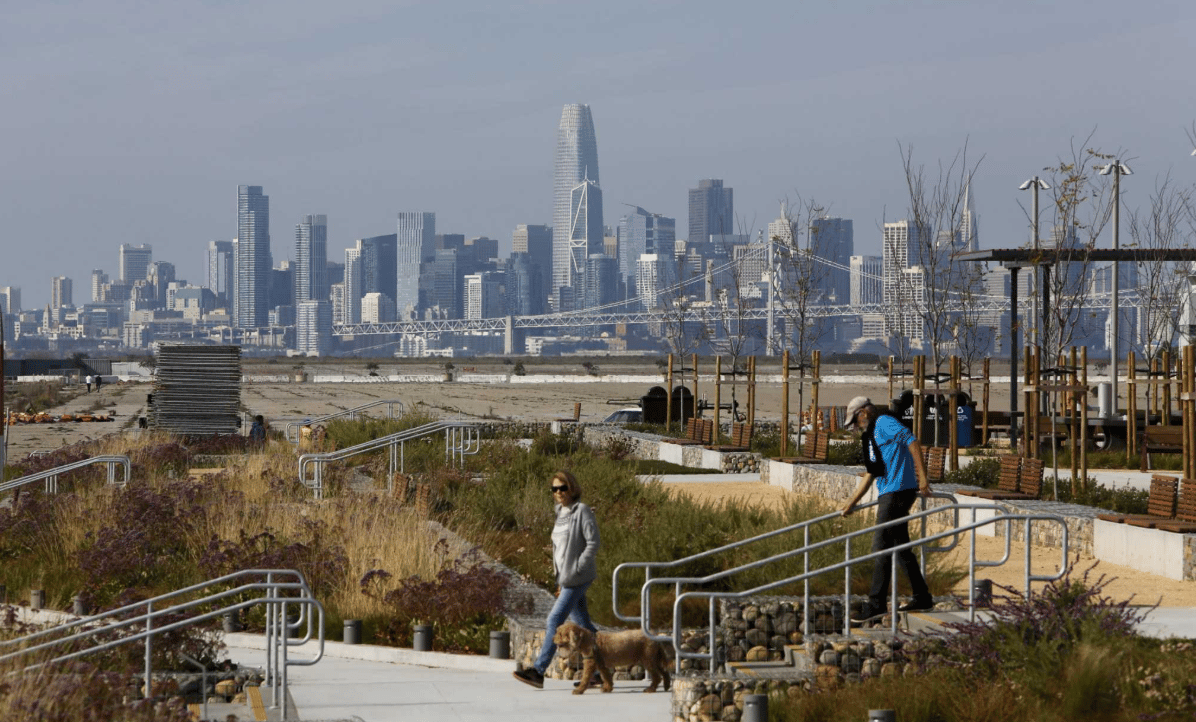
Alameda Point Redevelopment: Housing and Community Growth
Alameda County Program Helps Seniors Age in Place by Selling Their Homes
Housing Affordability in Alameda County: What It Means for Homebuyers and Homeowners
A successful move requires someone who can see both the immediate details and the larger picture. Joe brings more than 35 years of experience to help clients make decisions with clarity and confidence. When you're ready, he's ready to help.
Joe LoParo
2437 Santa Clara Ave Alameda, CA 94501 Joe LoParo | CA DRE# 01394083 Keller Williams Advisors | CA DRE# 02029039