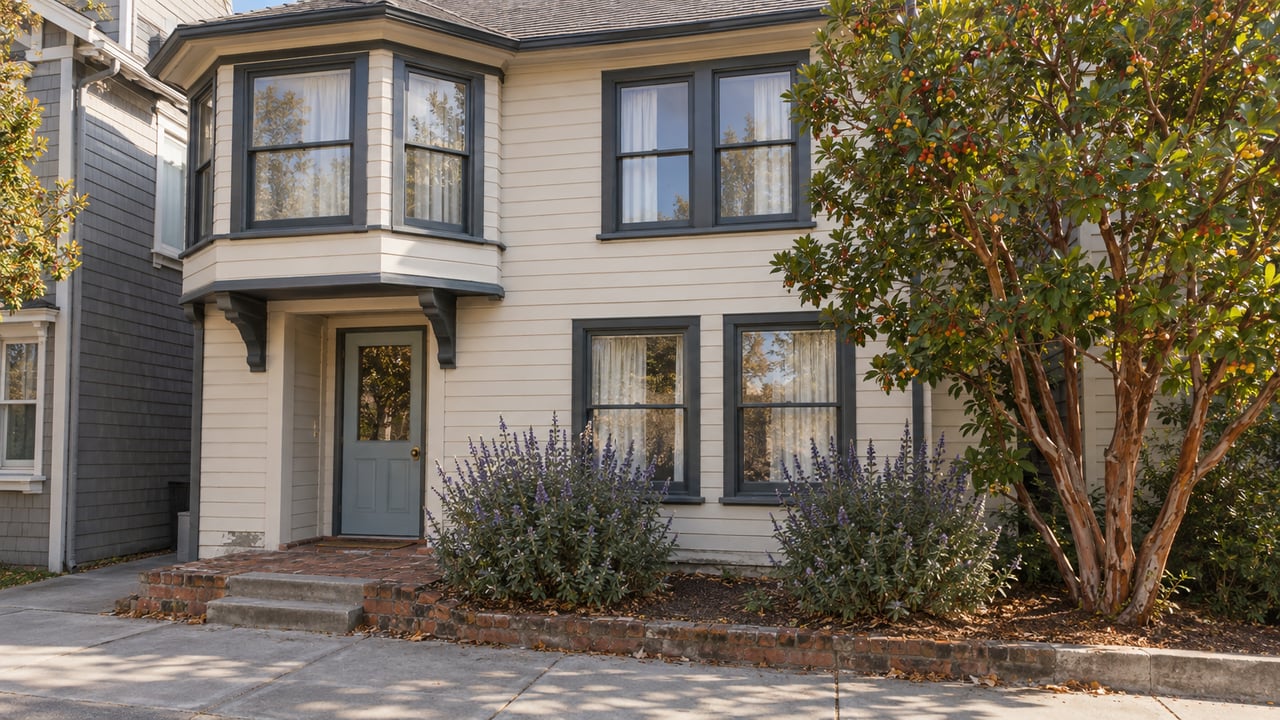
Park Street's Bakery Boom Shouldn't Have Happened This Fast
Walk down Park Street on a Friday morning and you will pass a line for pastries before you pass a line for coffee. That is new. Alameda's downtown corridor has had good bakeries for years, but never four or five of them clustered inside a six-block stretch, all drawing crowds at the same time, all within the same twelve months.
The count matters because of what it took to get there. This is not a corridor where permitting moves fast or storefronts turn over easily. The city has spent much of 2026 trying to fix that. The bakeries didn't wait for the fix.
Nobody has put these openings next to each other in order, so here is the sequence as it actually happened:
That's on top of a set of bakeries that were already doing steady business before any of this started: Crispian Bakery, Firebrand Bread, and Donut Petit, plus a weekend doughnut program at Moxie that has its own following. SFGATE's food team walked Park Street in late August and called it a genuine bakery boom, one that's starting to pull attention away from the idea that Alameda's dining scene lives in Oakland and Berkeley's shadow.
Here's the part that makes the timeline more interesting, not less. Ones was supposed to open in two weeks.
When Coffee Cultures closed on Park Street at the end of January, the plan was a fast handoff. A new operator was already lined up. The space had been running as a fully licensed food business for years. What followed instead was a six-month gap between the January closure and the July 1 opening, and the delay had almost nothing to do with the storefront itself. It came down to Alameda County's Environmental Health review, which treats a change in ownership as a reason to reopen the entire permitting file. A local coffee blog that tracked the saga in real time reported that a bigger pastry case, a mop sink in the back utility room, and full plan-check approval all became separate hurdles before construction could even start. One former Coffee Cultures barista who had planned to stay on for the new cafe took another job while she waited.
None of that shows up in the pastry case. It shows up in the fact that Park Street's bakery boom happened on the far side of exactly the kind of friction that usually slows a corridor down, not because that friction disappeared.
The city noticed the same gap. On September 14, Alameda's Planning Board took up a Downtown Commercial Zoning Text Amendment aimed squarely at Park and Webster Streets, the city's two primary commercial corridors. The changes on the table would rework land-use rules, window and wall transparency requirements, and use classifications, all with the stated goal of making it faster and less costly for a business to open, and to stay open, along either corridor. The effort follows a public workshop held back on July 13 and sits inside a broader vacancy-reduction push tied to the city's Housing Element and General Plan 2040.
The Downtown Alameda Business Association, which represents close to 500 businesses along the corridor, counts more than 110 of those as dining and drinking establishments already. That density is not new. Alameda loosened parking minimums along Park and Webster back in 2007 specifically to keep property owners from demolishing historic buildings to make room for parking lots, a preservation move that shaped the corridor long before any of this year's bakeries existed.
What's worth sitting with is the order of operations. The zoning fix is designed to make the next wave of openings easier. This wave already happened without it, which says something about how much appetite there was on Park Street before City Hall got involved.
If you're doing this on a weekend morning, the order matters more than it sounds like it should. Ones runs Wednesday through Sunday, 8 a.m. to 3 p.m., and its manager has said flatly that the pastry case has been selling out since noon most days since opening, so the moon croissant and the lemongrass chicken pastry are morning items, not afternoon ones. Bake Sum keeps similar hours and similar odds. Moxie's doughnut program is a weekend-only thing, so it doesn't overlap with a Tuesday coffee run the way the others do.
None of this requires a car. Fikscue, Ones, Bake Sum, Crispian, and Firebrand all sit within a few blocks of each other on the same street, which is part of why the manager at Ones described Park Street to a Chronicle reporter simply as the hub for food. That was true before this year. It's just gotten a lot more literal.
If you've lived in Alameda long enough to remember when Park Street's food identity started and ended with Fikscue's line, the last twelve months have quietly rewritten that. Worth a Saturday morning before the case empties out.
If a family member's estate ever includes a Park Street storefront, or you're weighing what a downtown-adjacent property is worth given how much foot traffic this corridor is now pulling, Joe LoParo has spent decades reading Alameda's commercial and residential streets block by block. Let's connect.
Alameda County Program Helps Seniors Age in Place by Selling Their Homes
Housing Affordability in Alameda County: What It Means for Homebuyers and Homeowners
How Energy-Efficient Improvements Are Shaping Alameda Housing
A successful move requires someone who can see both the immediate details and the larger picture. Joe brings more than 35 years of experience to help clients make decisions with clarity and confidence. When you're ready, he's ready to help.
Joe LoParo
2437 Santa Clara Ave Alameda, CA 94501 Joe LoParo | CA DRE# 01394083 Keller Williams Advisors | CA DRE# 02029039